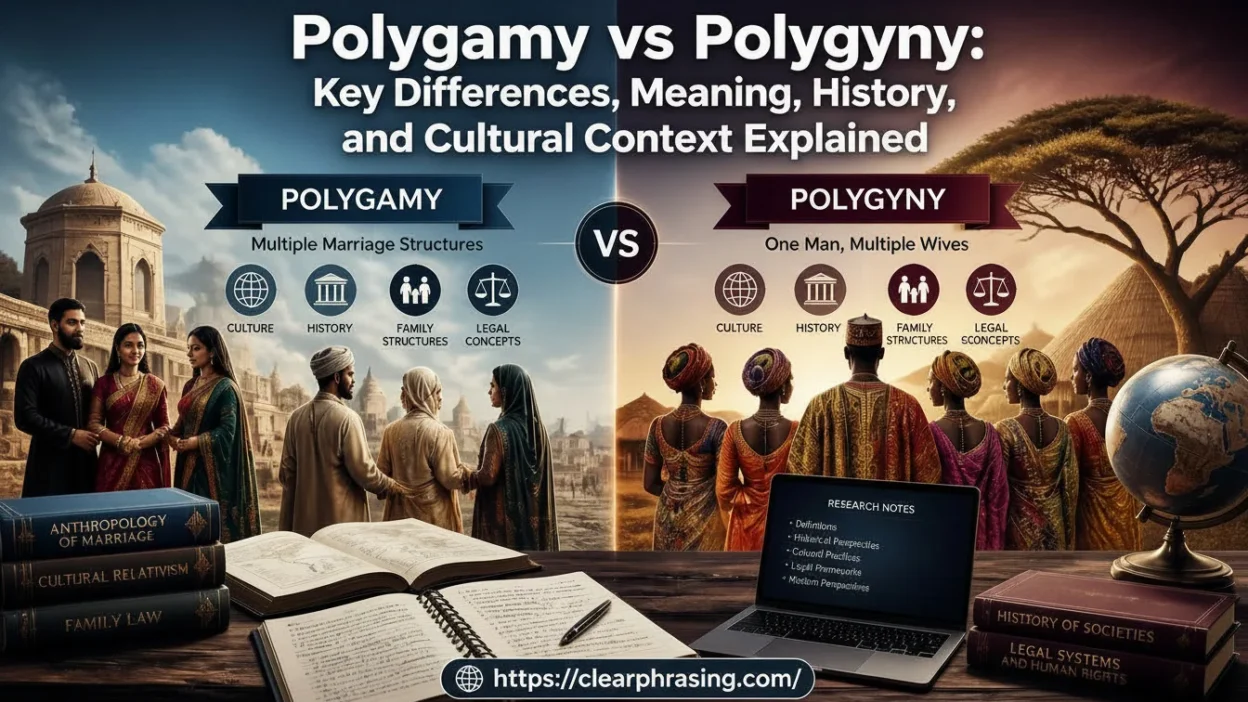
Polygamy vs Polygyny: Key Differences, Meaning, and History explains two terms that many people confuse. From my teaching experience, students often know the words but not their exact meaning.
Polygamy is the broader term for a marriage system where one person has more than one spouse or multiple spouses. Polygyny is a specific form in which one man is married to multiple wives or several women at the same time. Understanding these key differences, similarities, and definitions makes the topic much easier to understand.
Throughout history, many cultures have followed different marital practices and marriage customs. While monogamy is the most familiar relationship, polyamory and polygamy are different ideas. Learning the correct terminology improves understanding, reduces confusion, strengthens your vocabulary, and helps you discuss relationships, family structure, cultural practices, and society with confidence.
Quick Answer:
Polygamy means a person has multiple spouses at the same time. It is the general category that includes different forms of plural marriage.
Polygyny is one specific type of polygamy where one man has two or more wives.
The simplest way to remember the difference:
- Polygamy = multiple spouses in general
- Polygyny = one husband with multiple wives
For example, if a marriage system includes one man and three women, it is both polygamy and polygyny. However, if one woman has multiple husbands, it is polygamy but not polygyny.
What Is Polygamy? Meaning and Definition
The word polygamy comes from Greek roots. The word “poly” means many, while “gamos” means marriage. Together, the term refers to a marriage arrangement involving multiple spouses.
Polygamy does not describe only one specific structure. Instead, it acts as an umbrella term covering different forms of plural marriage.
A person may use the word polygamy when discussing:
- A man with multiple wives.
- A woman with multiple husbands.
- A group marriage involving several people.
However, the exact structure depends on the type of polygamy being practiced.
Main Types of Polygamy
| Type | Definition | Example |
| Polygyny | One man has multiple wives | One husband with three wives |
| Polyandry | One woman has multiple husbands | One wife with two husbands |
| Group Marriage | Several men and women form a marital unit | Multiple adults sharing marital relationships |
Polygyny has historically been the most common form of polygamy. Polyandry and group marriage have existed too, but they are much less widespread.
What Is Polygyny? Meaning and Definition
Polygyny specifically describes a marriage system where one man is married to multiple women at the same time.
It comes from Greek words:
- Poly = many
- Gyne = woman or wife
Unlike polygamy, which covers all forms of multiple-spouse marriage, polygyny focuses only on multiple wives.
For example:
- A man married to one woman follows monogamy.
- A man married to three women practices polygyny.
- A woman married to three men practices polyandry, not polygyny.
The distinction is important because the gender arrangement changes the meaning of the term.
Polygamy vs Polygyny: Key Differences
The biggest difference between polygamy and polygyny is their scope.
Polygamy is the larger category. Polygyny is one specific type within that category.
| Feature | Polygamy | Polygyny |
| Meaning | Multiple spouses of any gender arrangement | One man with multiple wives |
| Category | Broad term | Specific type |
| Includes | Polygyny, polyandry, group marriage | Only multiple-wife marriages |
| Gender Requirement | No specific gender structure | Male husband with female spouses |
| Historical Frequency | General concept | Most common form of plural marriage |
A simple comparison makes the relationship clearer:
Polygamy is like the word “vehicle.”
Vehicles include cars, trucks, motorcycles, and buses.
Similarly:
Polygamy includes polygyny, polyandry, and other plural marriage systems.
Relationship Between Polygamy and Polygyny
Many people confuse these terms because they overlap. The easiest way to understand their connection is through a category system.
Marriage systems involving multiple spouses:
- Polygamy
- Polygyny → One man with multiple wives
- Polyandry → One woman with multiple husbands
- Group marriage → Multiple men and women together
Every polygynous marriage is polygamous, but every polygamous marriage is not polygynous.
This difference matters in academic discussions because researchers need accurate terms when studying family structures and cultural practices.
History of Polygyny Around the World
Polygyny has existed in many societies throughout history. Ancient civilizations, tribal communities, and royal families have practiced forms of polygyny for different social and economic reasons.
Historically, some societies associated multiple wives with:
- Wealth and social status.
- Political alliances.
- Larger family networks.
- Increased labor resources.
- Population growth after conflicts or high mortality rates.
For example, some rulers maintained multiple marriages because those relationships strengthened alliances between powerful families or communities.
However, polygyny was not practiced for the same reasons everywhere. Each society developed its own traditions based on economic conditions, cultural values, and social organization.
Historical Examples of Polygyny
Ancient Kingdoms
Some ancient rulers had multiple wives as a symbol of power and influence. Marriage could create political connections between different groups.
Agricultural Societies
In some farming communities, larger households provided additional labor for farming, childcare, and household responsibilities.
Tribal Communities
Certain traditional societies practiced polygyny because extended families created stronger support networks.
These examples show that polygyny developed through various historical circumstances rather than one single cause.
Polygyny in Modern Society
Today, polygyny still exists in some parts of the world. Its acceptance depends heavily on local culture, religion, and legal systems.
Modern polygynous families may organize their households in different ways.
Some families may:
- Live together in one household.
- Maintain separate homes.
- Share parenting responsibilities.
- Create financial agreements among spouses.
The experiences of people in polygynous marriages can vary widely. Some individuals view the arrangement as a cultural or personal choice, while others criticize it because of concerns about equality, fairness, or social pressure.
Examples of Polygyny Around the World
Polygyny has appeared in different regions, including parts of:
- Africa.
- The Middle East.
- Asia.
- Historical communities in Europe and North America.
In some African societies, polygyny has traditionally been connected with family expansion, community relationships, and agricultural lifestyles.
In some religious communities, interpretations of religious teachings have influenced attitudes toward polygyny.
However, cultural practices and legal rules are not always the same. A society may recognize a tradition socially while government laws may restrict or regulate it.
Other Forms of Polygamy
Polyandry: One Woman With Multiple Husbands
Polyandry is another form of polygamy. It occurs when one woman has multiple husbands at the same time.
Although much rarer than polygyny, polyandry has existed in certain societies.
Historically, some communities practiced polyandry because of:
- Limited farmland.
- Economic concerns.
- Family inheritance systems.
One example is fraternal polyandry, where several brothers marry the same woman. This arrangement historically helped keep family property together in some communities.
Group Marriage
Group marriage refers to a relationship structure involving multiple men and women.
This form is uncommon compared with polygyny and polyandry.
Group marriage differs because it does not follow a simple one-husband or one-wife structure. Instead, several people form a shared marital relationship.
Legal Status of Polygamy and Polygyny Today
The legal status of polygamy and polygyny varies significantly around the world.
Some countries recognize certain forms of plural marriage under specific conditions. Other countries legally recognize only marriages involving two spouses.
Legal systems often focus specifically on polygyny because it is the most common form of plural marriage.
Legal Differences
| Situation | Explanation |
| Legal recognition | Government officially accepts the marriage |
| Cultural acceptance | Society allows or supports the practice |
| Illegal practice | Laws prohibit additional marriages |
A person may participate in a culturally accepted practice while still facing legal restrictions depending on their country.
Religious Perspectives on Polygamy and Polygyny
Religion has played an important role in discussions about plural marriage.
Different religions and communities have developed different interpretations regarding polygamy and polygyny.
Some traditions historically allowed forms of plural marriage under certain conditions. Others promoted monogamy as the preferred marriage structure.
It is important to understand that religious views are diverse. A single belief system may include different interpretations across regions and communities.
Social and Family Dynamics of Polygyny
Polygyny creates unique family structures. Like any relationship system, it involves responsibilities, expectations, and challenges.
Family Organization
Polygynous families may need clear communication about:
- Financial responsibilities.
- Parenting roles.
- Household arrangements.
- Emotional relationships.
Successful family management often depends on fairness, trust, and cooperation.
Common Challenges
Some challenges associated with polygyny include:
- Competition between spouses.
- Emotional stress.
- Financial responsibilities.
- Questions about equal treatment.
Perspectives From Supporters
Some supporters argue that polygyny can provide:
- Larger family networks.
- Shared childcare responsibilities.
- Strong community connections.
Different people view these systems differently based on personal experiences and cultural backgrounds.
Common Misunderstandings About Polygamy vs Polygyny
Polygamy and Polygyny Mean Exactly the Same Thing
This is the most common misunderstanding.
Reality: Polygyny is only one type of polygamy.
Polygamy Always Means Multiple Wives
Reality: Polygamy can involve different spouse arrangements.
Polygyny Exists Only in One Culture
Reality: Polygyny has appeared in many societies throughout history.
Polygamy Means Having Multiple Romantic Partners
Reality: Polygamy specifically refers to marriage structures, not simply relationships.
Polygamy vs Polygyny vs Monogamy
Understanding the difference becomes easier when comparing all three terms.
| Marriage System | Meaning |
| Monogamy | One person has one spouse |
| Polygamy | One person has multiple spouses |
| Polygyny | One man has multiple wives |
Monogamy remains the dominant legal marriage structure in many countries. Polygamy and polygyny represent alternative marriage systems found in certain cultural and historical contexts.
Read More: Altogether vs All Together: Difference, Meaning, and Usage
FAQs
Q1. What is the main difference between polygamy and polygyny?
Polygamy is a general term for a marriage involving more than one spouse. Polygyny is one specific type of polygamy in which one man has multiple wives.
Q2. Is polygyny the same as polyandry?
No. Polygyny means one man is married to several wives, while polyandry means one woman is married to several husbands.
Q3. Is polygamy legal everywhere?
No. The legal status of polygamy depends on the country’s laws. Many countries recognize only monogamous marriages, while others allow certain forms of polygamy.
Q4. Why are polygamy and polygyny often confused?
People often confuse them because the words are closely related. However, polygyny is only one form of the broader concept of polygamy.
Q5. Can a woman be part of polygyny?
Yes, as one of the wives in a polygynous marriage. However, the husband is the single man with multiple wives.
Q6. How is polyamory different from polygamy?
Polyamory involves consensual romantic relationships with multiple partners and does not necessarily include marriage. Polygamy specifically refers to marriage with multiple spouses.
Q7. Which form of polygamy is most common?
Polygyny is the most common and historically widespread form of polygamy across many cultures.
Q8. Why should I learn the difference between these terms?
Knowing the correct meanings improves your writing, speaking, and understanding of history, culture, and social discussions.
Q9. Does religion always determine whether people practice polygamy?
No. Religious beliefs can influence it, but cultural traditions, social customs, and historical factors have also played important roles.
Q10. What is the easiest way to remember polygamy and polygyny?
Remember that polygamy is the umbrella term for marriages with multiple spouses, while polygyny specifically means one man has multiple wives.
Conclusion
Understanding the difference between polygamy and polygyny helps you use these terms correctly in conversations, academic writing, and discussions about history and culture. Although they are closely related, they are not interchangeable. Polygamy is the broader concept, while polygyny describes one specific marriage pattern involving one man and multiple wives.
From my teaching experience, students remember these terms more easily when they focus on real-life examples instead of memorizing definitions. Once you understand their meanings and cultural background, you can communicate with greater accuracy, avoid common mistakes, and confidently discuss different marriage systems and relationship structures.

Shamsa Kanwal is an English specialist and content writer at ClearPhrasing.com, where she helps readers navigate the English language with confidence. She enjoys breaking down grammar rules, spelling differences, vocabulary, and everyday writing challenges into simple, practical lessons that anyone can understand.
Her writing is focused on making learning approachable rather than overwhelming. Whether she’s explaining commonly confused words, punctuation rules, or grammar concepts, Shamsa believes that clear explanations and real-life examples are the key to effective learning.
Every article she writes is carefully researched, fact-checked, and edited to ensure it is accurate, easy to read, and genuinely helpful. Her goal is to create trustworthy resources that enable students, professionals, writers, and English learners to improve their communication skills and write with greater clarity.
Through her work at ClearPhrasing.com, Shamsa is committed to making English learning simpler, more practical, and accessible for readers around the world.